

The incident shows how deeply caste continues to shape our social and political imagination.
7 hours ago
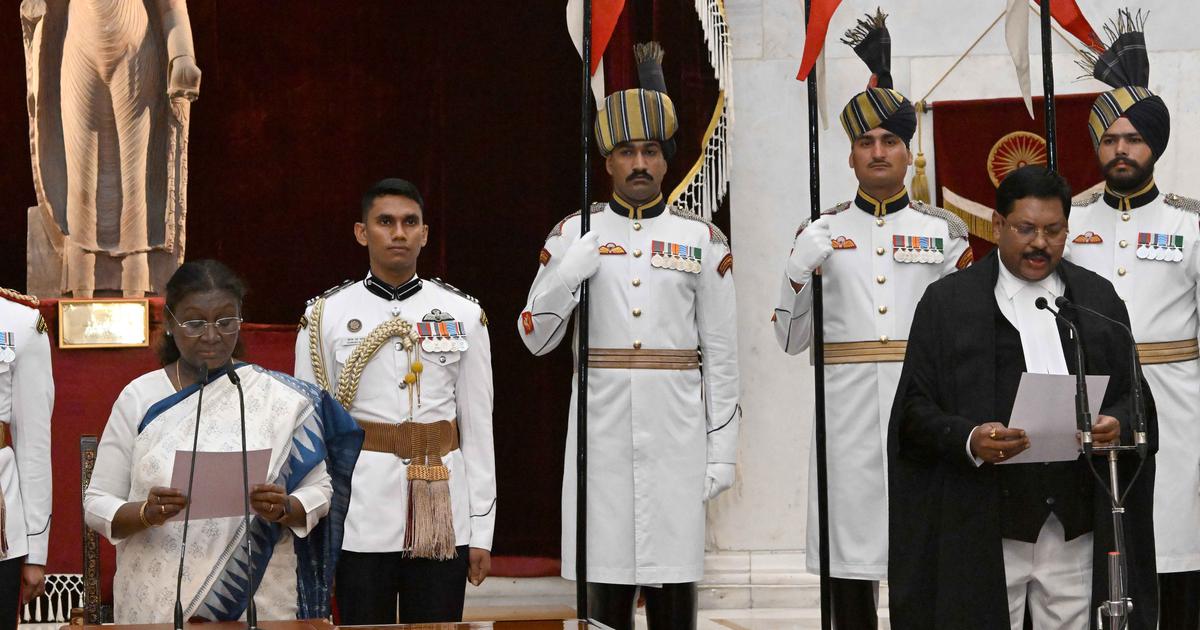
Advocate Rakesh Kishore’s gesture of hurling a shoe at Chief Justice of India BR Gavai inside the Supreme Court on Monday exposes deeper anxieties about authority, belief and hierarchy in contemporary India, revealing how fragile respect for constitutional institutions becomes when social hierarchies are challenged.
The attack seemed to have been a response to Gavai’s remarks, about a damaged idol of Vishnu in Madhya Pradesh, which some claimed were disrespectful.
Gavai is only the second Dalit and first Buddhist to hold the post of the chief justice of India. His journey, from a Scheduled Caste background in Maharashtra to the pinnacle of the judiciary, symbolised the promise of BR Ambedkar’s Constitution: that birth should not determine destiny.
Gavai’s elevation followed the collegium process of being endorsed by senior colleagues, reflecting individual merit and the aspiration for a judiciary that mirrors India’s diversity.
The attack on the chief justice of India, a constitutional figure representing the rule of law, underscores how deeply caste continues to shape our social and political imagination.
Limits of affirmative action
Affirmative action in India, through reservations in education, employment, and politics, was a corrective measure intended to dismantle entrenched exclusion and open spaces of power to historically oppressed communities. These policies have transformed India’s institutions, producing leaders, scholars, judges and administrators from Dalit, Adivasi and the Other Backward Classes communities who reshape public life.
Yet, the attack on Gavai is reminder us that representation, while necessary, is not sufficient. Social mobility does not automatically translate into social dignity. Caste is not shed through success. It follows individuals in surnames, social media comments, casual jokes, and, even acts of physical hostility. Affirmative action has opened doors, but it cannot change the mindset of those who see hierarchy as natural.
Caste in the age of majoritarianism
Caste has adapted, surviving in everyday exclusions, online hatred and violent gestures which seek to discipline those who cross invisible social boundaries.
Until these moral foundations of caste are challenged in how Indians worship, whom we befriend, and what we normalise, the Republic will remain haunted by its oldest inequality.
The attack on Chief Justice Gavai is a wake-up call and a reminder that the promise of the Constitution will remain incomplete until the social revolution Ambedkar envisioned becomes a lived reality.
Aniruddha Mahajan is a doctoral researcher at the University of Edinburgh, UK. His research interests include caste inequalities, student activism, nationalism, contemporary regional and national politics, and intellectual history of South Asia.
Sourced from Scroll.in
@freemang2001gmail-com


