

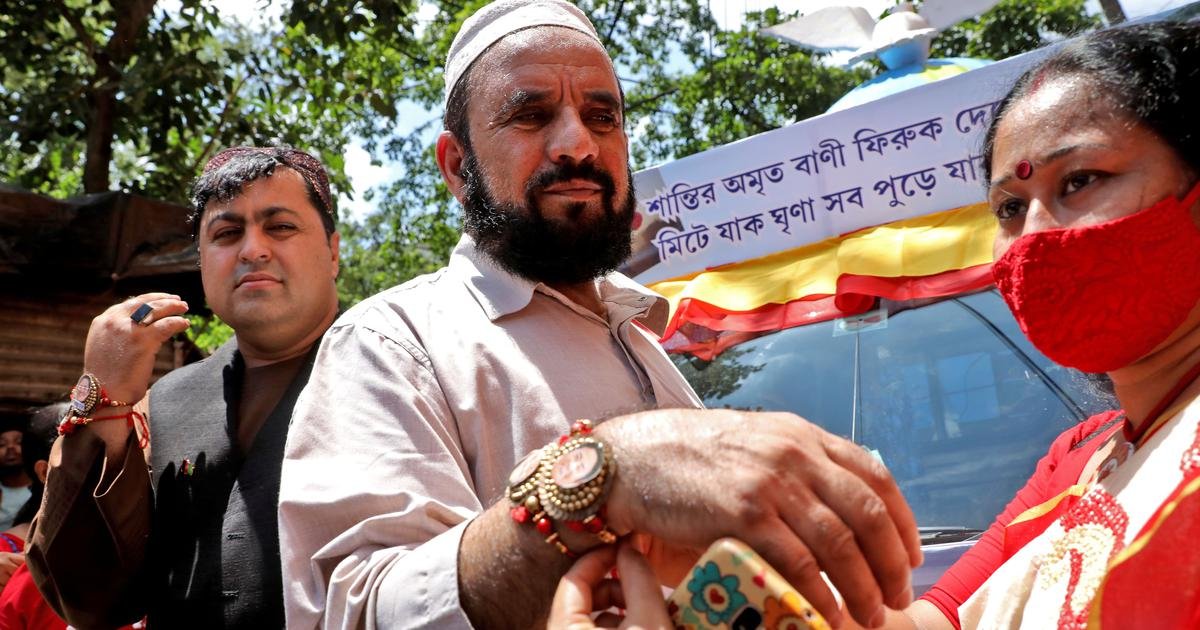
An Indian woman ties a rakhi on the wrist of an Afghan national on Raksha Bandhan in Kolkata in August 2021, days after the Taliban seized power in Afghanistan. | Reuters
In 2012, I turned to a senior colleague at the BBC for help. He was Bengali – older, thoughtful and the kind of mentor who encouraged me to write, photograph and pursue stories that carried meaning and truth. I told him about a story I couldn’t let go of, one that had followed me all my life in exile: Kabuliwala by Rabindranath Tagore.
I had grown up in India, away from my homeland, and in Tagore’s story of a travelling Afghan selling dry fruits in Bengal, I saw pieces of myself: the foreigner who became familiar, the wanderer who longed to belong. I wondered if the Kabuliwala had truly been fiction, or if his descendants still walked the lanes of Kolkata. Did they still speak Pashto? Did they still carry that gentle dignity of distance?
I asked Nazes if he would help me. I needed someone who knew Kolkata’s backstreets and its layered soul, for I was, like the Kabuliwala, still a stranger in that city. Nazes, a proud Bengali, would later translate Mujtaba Ali’s remarkable writings – essays that captured the deep historical affection between Afghanistan and Bengal. He smiled and said, “Then we must go looking for him.”
That search took three years. In the city’s narrow alleys, between tea shops and fading warehouses, we met a man named Amir Khan who was the head of a small Afghan community which had quietly endured in Kolkata for generations. Khan was nothing like the Bollywood actor who shared his name. He was a descendant of the Kabuliwalas who had once come with trunks of dry fruits and carpets.
By the time we met him, the trade had changed. The old pushcarts were gone. In their place stood small textile and clothing shops that lined the bustling lanes of Burrabazar. The families who ran them still carried something unmistakably Afghan – not in their passports, but in their posture, their pride, their way of greeting you, hand over heart.
Khan was tall, broad-shouldered, with a thick moustache and a face that carried the calm of someone who has watched worlds shift but never surrendered his grace. He longed for home, yes, but he also built one where he stood. Each morning he would walk the same streets the Kabuliwala might once have walked, his shoulders straight, his smile unhurried. He carried himself with quiet dignity – the kind that comes from survival without bitterness.
When he spoke of Afghanistan, his eyes softened, and his Urdu carried a Pashto accent that gave every sentence the warmth of home. “We are part of Kolkata,” he told me, “but Kabul is still in our dreams.”
https://platform.twitter.com/embed/Tweet.html?creatorScreenName=scroll_in&dnt=false&embedId=twitter-widget-1&features=eyJ0ZndfdGltZWxpbmVfbGlzdCI6eyJidWNrZXQiOltdLCJ2ZXJzaW9uIjpudWxsfSwidGZ3X2ZvbGxvd2VyX2NvdW50X3N1bnNldCI6eyJidWNrZXQiOnRydWUsInZlcnNpb24iOm51bGx9LCJ0ZndfdHdlZXRfZWRpdF9iYWNrZW5kIjp7ImJ1Y2tldCI6Im9uIiwidmVyc2lvbiI6bnVsbH0sInRmd19yZWZzcmNfc2Vzc2lvbiI6eyJidWNrZXQiOiJvbiIsInZlcnNpb24iOm51bGx9LCJ0ZndfZm9zbnJfc29mdF9pbnRlcnZlbnRpb25zX2VuYWJsZWQiOnsiYnVja2V0Ijoib24iLCJ2ZXJzaW9uIjpudWxsfSwidGZ3X21peGVkX21lZGlhXzE1ODk3Ijp7ImJ1Y2tldCI6InRyZWF0bWVudCIsInZlcnNpb24iOm51bGx9LCJ0ZndfZXhwZXJpbWVudHNfY29va2llX2V4cGlyYXRpb24iOnsiYnVja2V0IjoxMjA5NjAwLCJ2ZXJzaW9uIjpudWxsfSwidGZ3X3Nob3dfYmlyZHdhdGNoX3Bpdm90c19lbmFibGVkIjp7ImJ1Y2tldCI6Im9uIiwidmVyc2lvbiI6bnVsbH0sInRmd19kdXBsaWNhdGVfc2NyaWJlc190b19zZXR0aW5ncyI6eyJidWNrZXQiOiJvbiIsInZlcnNpb24iOm51bGx9LCJ0ZndfdXNlX3Byb2ZpbGVfaW1hZ2Vfc2hhcGVfZW5hYmxlZCI6eyJidWNrZXQiOiJvbiIsInZlcnNpb24iOm51bGx9LCJ0ZndfdmlkZW9faGxzX2R5bmFtaWNfbWFuaWZlc3RzXzE1MDgyIjp7ImJ1Y2tldCI6InRydWVfYml0cmF0ZSIsInZlcnNpb24iOm51bGx9LCJ0ZndfbGVnYWN5X3RpbWVsaW5lX3N1bnNldCI6eyJidWNrZXQiOnRydWUsInZlcnNpb24iOm51bGx9LCJ0ZndfdHdlZXRfZWRpdF9mcm9udGVuZCI6eyJidWNrZXQiOiJvbiIsInZlcnNpb24iOm51bGx9fQ%3D%3D&frame=false&hideCard=false&hideThread=false&id=1976841676116066626&lang=en&origin=https%3A%2F%2Fscroll.in%2Farticle%2F1083717%2Fhow-the-israel-iran-conflict-could-impact-india&sessionId=1d180d431e276802ab88d9404b20d953f816da1b&siteScreenName=scroll_in&theme=light&widgetsVersion=2615f7e52b7e0%3A1702314776716&width=550px
As a young woman with a camera and questions larger than myself, I found in Amir Sahib – as I came to call him – both guide and guardian. Through his trust, I entered the heart of a community that had lived a century of displacement. He opened doors, introduced me to others in his world, and allowed me to see it with tenderness and truth.
Together, we built something lasting. Our final collection of work, From Kabul to Kolkata, became a photographic journey across a century of connection – through trade, friendship, and memory. The portraits told a quieter story of how belonging endures even after borders have shifted.
The Kabuliwala was no longer fiction. He was every migrant who holds two homes in his heart and belongs wholly to neither. When your work travels across borders and speaks to strangers who have never met you, you know it has done justice to its purpose. The Kabuliwala helped me find my own roots – to reclaim an Afghan identity too often reduced to conflict, and to reveal another face of my homeland: tender, dignified and deeply human.
Growing up in India, I was always asked one of two questions: about the war in Afghanistan, or about Tagore’s Kabuliwala. Only one of those questions brought comfort. Because Kabuliwala was never about war but about love, loss and the fragile thread that binds strangers.
But art, as Tagore knew, is not only emotional, it is moral. On October 11, the Taliban regime’s foreign minister Amir Khan Muttaqi, who is visiting India, invoked Kabuliwala to praise the “deep cultural and civilisational ties” between the two countries.
https://platform.twitter.com/embed/Tweet.html?creatorScreenName=scroll_in&dnt=false&embedId=twitter-widget-2&features=eyJ0ZndfdGltZWxpbmVfbGlzdCI6eyJidWNrZXQiOltdLCJ2ZXJzaW9uIjpudWxsfSwidGZ3X2ZvbGxvd2VyX2NvdW50X3N1bnNldCI6eyJidWNrZXQiOnRydWUsInZlcnNpb24iOm51bGx9LCJ0ZndfdHdlZXRfZWRpdF9iYWNrZW5kIjp7ImJ1Y2tldCI6Im9uIiwidmVyc2lvbiI6bnVsbH0sInRmd19yZWZzcmNfc2Vzc2lvbiI6eyJidWNrZXQiOiJvbiIsInZlcnNpb24iOm51bGx9LCJ0ZndfZm9zbnJfc29mdF9pbnRlcnZlbnRpb25zX2VuYWJsZWQiOnsiYnVja2V0Ijoib24iLCJ2ZXJzaW9uIjpudWxsfSwidGZ3X21peGVkX21lZGlhXzE1ODk3Ijp7ImJ1Y2tldCI6InRyZWF0bWVudCIsInZlcnNpb24iOm51bGx9LCJ0ZndfZXhwZXJpbWVudHNfY29va2llX2V4cGlyYXRpb24iOnsiYnVja2V0IjoxMjA5NjAwLCJ2ZXJzaW9uIjpudWxsfSwidGZ3X3Nob3dfYmlyZHdhdGNoX3Bpdm90c19lbmFibGVkIjp7ImJ1Y2tldCI6Im9uIiwidmVyc2lvbiI6bnVsbH0sInRmd19kdXBsaWNhdGVfc2NyaWJlc190b19zZXR0aW5ncyI6eyJidWNrZXQiOiJvbiIsInZlcnNpb24iOm51bGx9LCJ0ZndfdXNlX3Byb2ZpbGVfaW1hZ2Vfc2hhcGVfZW5hYmxlZCI6eyJidWNrZXQiOiJvbiIsInZlcnNpb24iOm51bGx9LCJ0ZndfdmlkZW9faGxzX2R5bmFtaWNfbWFuaWZlc3RzXzE1MDgyIjp7ImJ1Y2tldCI6InRydWVfYml0cmF0ZSIsInZlcnNpb24iOm51bGx9LCJ0ZndfbGVnYWN5X3RpbWVsaW5lX3N1bnNldCI6eyJidWNrZXQiOnRydWUsInZlcnNpb24iOm51bGx9LCJ0ZndfdHdlZXRfZWRpdF9mcm9udGVuZCI6eyJidWNrZXQiOiJvbiIsInZlcnNpb24iOm51bGx9fQ%3D%3D&frame=false&hideCard=false&hideThread=false&id=1977025390658117939&lang=en&origin=https%3A%2F%2Fscroll.in%2Farticle%2F1083717%2Fhow-the-israel-iran-conflict-could-impact-india&sessionId=1d180d431e276802ab88d9404b20d953f816da1b&siteScreenName=scroll_in&theme=light&widgetsVersion=2615f7e52b7e0%3A1702314776716&width=550px
The irony was deafening. I could not help but recoil. Those who have silenced song, erased women from public life and bombed the statues of the Buddha were now invoking Tagore: the humanist who saw beauty in universality, who wrote of compassion and who taught us that dignity cannot be dictated. I wondered if anyone in that audience paused to feel the contradiction, to realise that those quoting Kabuliwala today are the same voices that forbid a girl to learn her alphabet.
Kabuliwala is no diplomatic metaphor but a mirror reflecting what we choose to remember and what we choose to forget. The irony weighed so heavily that I found myself speaking to Tagore in silence, as if across time. I imagined the poet hearing it too: his eyes narrowing in quiet disbelief, his silence deliberate, his hand brushing the white beard of wisdom and patience. And in that stillness, I heard him say:
Ah, my dear ideologues of sand and silence,
You have taken an interest in my humble tale of the Kabuliwala –
A man of Afghanistan with a heart larger than his turban,
Who crossed borders not to conquer, but to connect.
He carried dried fruits in his bag, not dogma in his beard.
Tell me – do you weep as he does for his daughter,
Or only when someone teaches a girl to read?Do you know how he loved a child not of his blood,
Or is your love reserved for bullets and blasphemy laws?
You call yourselves guardians of tradition,
Yet I wrote of kindness, of memory, of longing –
And you rewrite it with gunpowder and fear,
Replacing raisins with rage, almonds with amnesia.
The Kabuliwala I wrote went to jail for a moment of anger.
You have turned wrath into weekly policy.
He came from the mountains to sell dry fruits.
You send boys from madrassas to sell dry futures.
If he heard your sermons, he’d cover his ears with his turban,
Whisper a prayer in Pashto, and go back to jail for peace.
So please – if you speak of my Kabuliwala,
Do not claim him as your own.
He was a man, not a muzzle.
Between Kabul and Kolkata runs not a corridor of convenience but a bridge of memory, built by ordinary men like Amir Khan, who carry in their hands the quiet weight of history. In these times, when politics distorts memory and power rewrites empathy, perhaps the only real bridge left between India and Afghanistan lies in Tagore’s story – a story that still whispers across borders that humanity travels farther than any passport, and that love, even in exile, remains a homeland of its own.
As the new custodians of control try to gild their politics with culture, let us not be deceived by beauty rehearsed in service of power. Art was never meant to perfume oppression, nor to soften the edges of tyranny. Tagore’s Kabuliwala was not a veil for violence, but a mirror for humanity.
Moska Najibullah is an Afghan-born writer and former journalist with the BBC. The daughter of Afghanistan’s former president, Dr Najibullah, she has spent much of her life in exile, and her work explores themes of migration, identity, and belonging. She is the co-author of Afghanistan: The Essential Guide to Customs & Culture and is recognised for her work on From Kabul to Kolkata: Of Memories, Belonging and Identity and Belonging Flexibly.
- Rabindranath Tagore
- Afghanistan
- Taliban
- Kabul
Sourced from Scroll.in


