

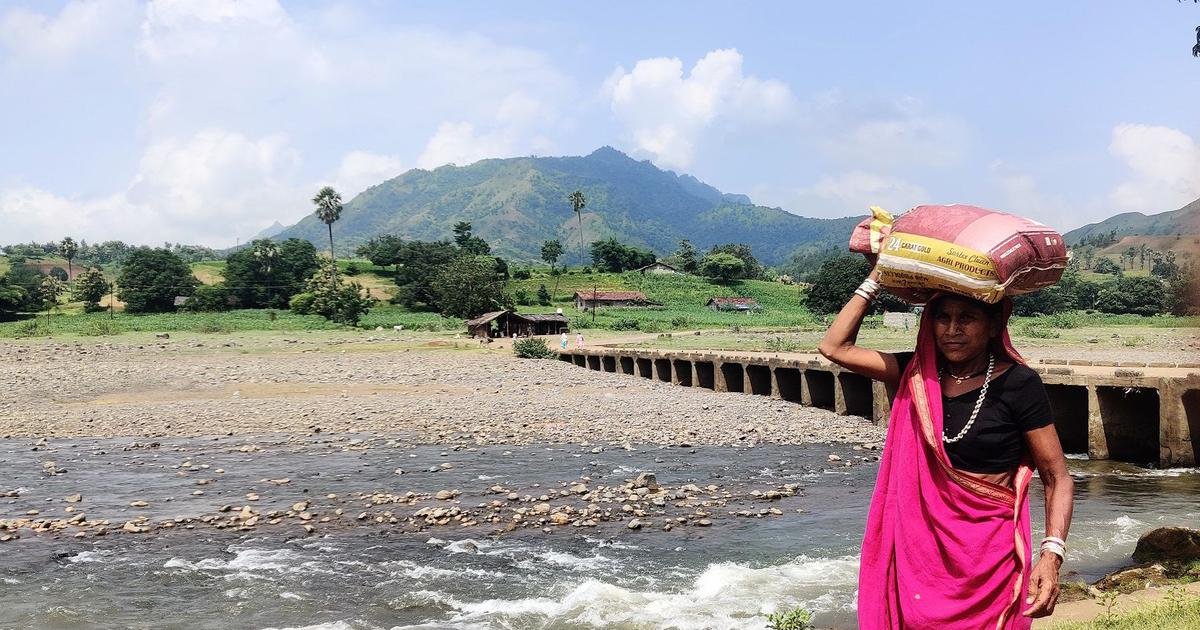
The Centre is bringing a bill to repeal the 100-day work law. The new bill will impose additional burdens on the state government. There are fears that the BJP coalition government's new bill will take away the right to legal security of work in rural areas.
The bill will be called the ‘Vikas Bharat Employment Guarantee and Livelihood Mission (Gramin)’ or ‘VB-G Ram Ji’. The bill proposes 125 days of work per year instead of 100 days. The landmark law was enacted by the Congress-led United Progressive Alliance government in 2005. It made the government legally bound to provide at least 100 days of work to every rural household that demands it, failing which it must pay them an unemployment allowance.
“Cost-shifting by stealth, not reform,” the Communist Party of India (Marxist) member said. “This is the new federalism: states pay more, Centre walks away, yet claims the credit.”
The CPI(M) Politburo said in a statement that the proposed bill seeks to not only change the name but also negate the basic features of the previous law. Therefore, the CPI(M) has demanded the immediate withdrawal of the proposed bill.
The bill has been given to the MPs, it is learnt. The government has stated the purpose of the new bill as "this new bill is in line with the goal of Developed India 2047".It is worth noting that although the 100-day work law or the Mahatma Gandhi Rural Employment Guarantee Act mentions 100 days, almost nowhere has that many days of work been provided per capita.
The BJP has been attacking the 100-day work law since the Narendra Modi-led government came to power. A case was filed in the court after work was suspended for three years in West Bengal.
Economist Jean Dreze said the new law “is all set to destroy MGNREGA in the guise of revamping it as a new scheme”
CPI(M) General Secretary MA Baby, in his response today, said that the central government is trying to hide the real truth in the name of complete reform of the REGA Act.This is dismantling the fundamental rights-based framework and drastically reducing the Centre's share. By shifting the burden of this on the states, the Centre can now punish opposition-ruled states by reducing allocations.This bill will also legalize technological interventions to deprive millions of people of their rights.
The High Court ordered the work to start last August, but it did not happen. The center went to the Supreme Court. Last November, the Supreme Court also said that the work should start.
The bill that the Center is trying to introduce to replace the 100-day work law mentions work under the Developed India National Rural Infrastructure Project.
The draft bill states that water-related works, works that lay the foundation for rural infrastructure, and infrastructure linked to livelihoods will be created.But the provision for all these works is in the Mahatma Gandhi Rural Employment Guarantee Scheme Act.
The new bill proposes to set up a Central Rural Employment Guarantee Council.This council will have a Chairperson and representatives from the Central and State Governments. There will be a maximum of 15 members representing Panchayat Raj institutions.It has been said that representatives of organizations representing the weakest sections of the village will be given a place in the council. An officer of the rank of Joint Secretary of the Central Government will be appointed as the member secretary.
Some also believe that if the council is formed instead of the Union Ministry of Rural Development, it will be easier for the Center to shift responsibility.
The Mahatma Gandhi Rural Employment Guarantee Act was passed during the tenure of the UPA-1 government. At that time, it was the Left, which supported the Congress coalition government at the center, that forced the center to pass this law. “NREGA was a demand-based scheme that determined work allocation,” said Nikhil Day, rural activist and founder of Mazdoor Kisan Shakti Sangathan. “Through this section, the government ends that demand. Now the central government will decide the allocation.”
During the Modi government's tenure, the implementation of the 100 days of work has been blocked through various strategies. The experience in West Bengal is even more horrific. The Trinamool Congress government in the state has committed extreme corruption. The BJP government at the center has stopped giving money, citing corruption as the reason. But the nodal officer of this project at the district level has not filed an FIR against any district magistrate or any head of the Trinamool panchayat, despite the legal provisions.
Unable to stop the work even after going to the Supreme Court, the state has been given new conditions. It has been asked to present a labor budget every three months. Citing the new guidelines from the Center, the state Chief Minister Mamata Banerjee has said that she will not accept the conditions. The net result is that there is extreme uncertainty surrounding when work will resume in the state. The state's farmers and farm workers' forum has called for a Raj Bhavan drive on December 23.
The Modi government has been speaking out against this law from the beginning. Prime Minister Modi himself mocked it in Parliament as a "land grabbing law".But during the Corona pandemic and lockdown, this project became the only help for a large number of people. Not only has the budget allocation been reduced, but working days have also been shortened in various states.
@freemang2001gmail-com


