

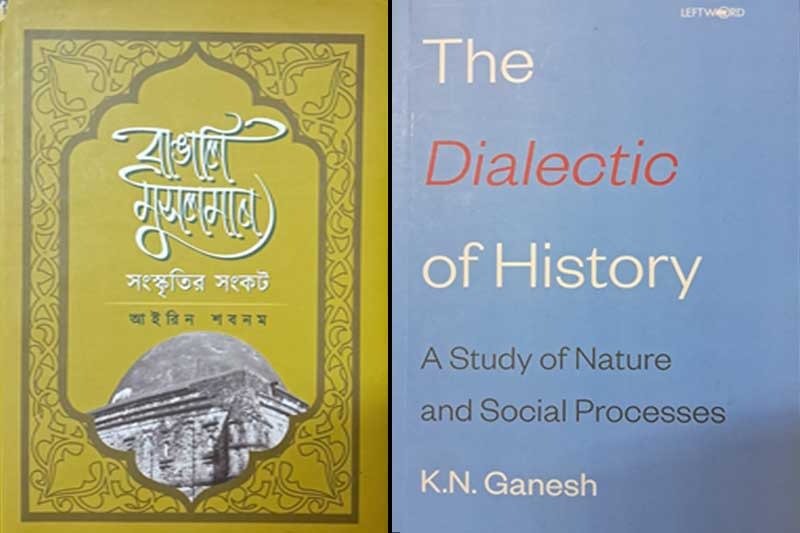
Two books—authored by Kerala-based historian K.N. Ganesh and Irin Shabnam, Head of the Department of Bengali at Itahar College—have been selected for the 2026 Muzaffar Ahmad Memorial Award. They will be presented with the award at a ceremony marking Muzaffar Ahmad’s 138th birth anniversary on August 5.The books selected for this year’s award are The Dialectic of History: A Study of Nature and Social Process by K.N. Ganesh (published by LeftWord) and Bangali Musalman: Sanskritir Sankat by Irene Shabnam (published by Ekush Shatak).
Srideep Bhattacharya, Chairperson of the Muzaffar Ahmed Memorial Award Committee, stated that books aimed at social progress are selected for the award each year. This time, too, the committee received many high-quality books in both Bengali and English.Together with two other committee members, Kallol Majumdar and Ziaul Alam, we have selected a book by K.N. Ganesh—a member of the Kerala Council for Historical Research—and two books by Irin Shabnam, Head of the Department of Bengali at Itahar College. These books are considered highly relevant to the present times and essential reading.
Regarding the book The Dialectic of History: A Study of Nature and Social Process, Sridip Bhattacharya notes that the author addresses several fundamental questions raised by Marxism. The book reflects years of profound thought and merits the attention of readers; it provides a coherent narrative—informed by the latest advancements—covering topics such as evolution in the study of science, the early history of human civilization, human migration, the trajectory of civilization, and the development of intellect.The author has demonstrated great skill in the profound application of natural and social sciences. Interest in Marxism has grown following the global economic crisis of 2008. This book has been written with the aim of addressing contemporary problems and understanding the revolutionary transformation of human society. It represents a significant addition to the body of work on Marxist theory.Irin Shabnam’s book is highly relevant in the current times and a must-read for progressive readers. Through a process of self-inquiry, she seeks answers to questions such as: Are the Muslims of Bengal not Bengali? Is their mother tongue not Bangla? Are the traditions and culture of this land not the culture of Indian Muslims? Is the culture of Arabia and Iran truly their own?Were Bengali Muslims not part of the glorious Bengal Renaissance? If not, why was that the case? Why did Bengali Muslims lag behind in embracing Western education, and why did a middle class fail to emerge among them as it did among Hindus? He has attempted to shed light on these issues from a rational and materialist perspective—an approach that remains highly relevant to contemporary India and Bengal.
@freemang2001gmail-com


